
Position papers on diagnostic latency, on data sovereignty in clinical computing, and on the standard of evidence a regulator will accept from computational comparison groups.
What Reltronic writes about
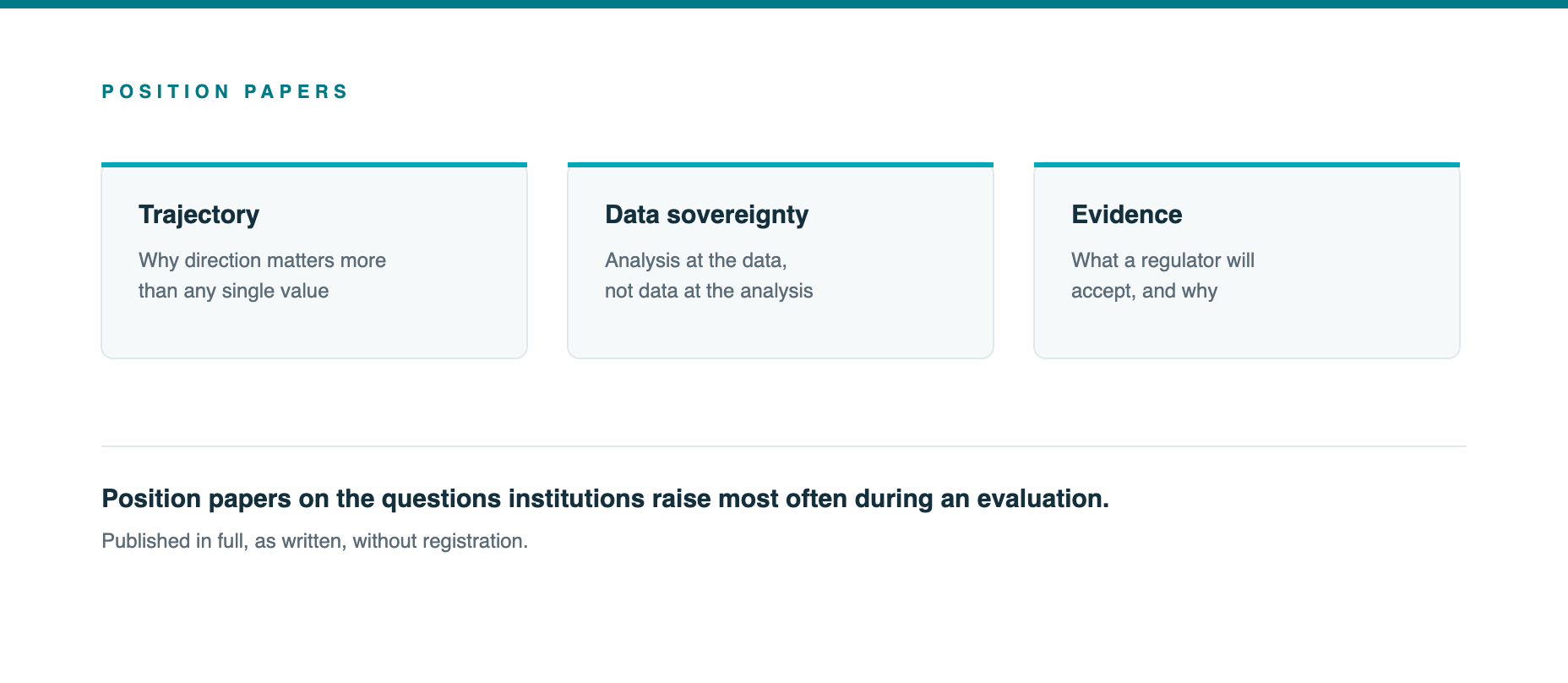
Three subjects account for most of what institutions ask during an evaluation, and each deserves a longer answer than a briefing allows. The first is trajectory: why the direction and rate of change across encounters is frequently more informative than any single measurement, and why systems built around thresholds miss it. The second is data sovereignty: what the European Health Data Space, GDPR and comparable regimes now require of clinical technology, and why an installed system is assessed differently from a cloud service. The third is evidence: what a regulator will accept from a computational comparison group, and what any institution should ask a vendor offering one.
Papers are published as written, in full, without registration or a form. An institution that would like to review a draft ahead of publication, or to propose a subject, can raise it during a briefing.
Published papers
-
Evidence Standards for External Control Arms in Small Populations
Regulatory receptivity to external control arms has grown, but it remains conditional. Acceptability turns on comparability of ascertainment, which is a question of provenance rather than of statistical adjustment.
-
Data Sovereignty Is an Architecture Decision, Not a Contract Decision
The legal basis for moving European health data to the United States has been rebuilt twice in ten years and is under appeal a third time. Clinical infrastructure procured today will still be running when that appeal is decided.
-
Alert Fatigue Is a Patient Safety Problem, Not a Usability Complaint
Clinical decision support alerts are overridden between 46 and 96 percent of the time. Override behavior is a rational response to a low base rate of signal, and alert volume is itself the mechanism of harm.